Deep dive #1: MIMs as starting point of city development | Room: Store Sal
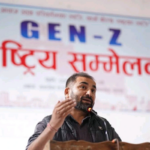
By Bigyan Ghimire, Municipality of Bhanu, Nepal
Cities around the world are investing in digital technologies to improve public services, sustainability, and quality of life. However, many cities struggle with fragmented systems, vendor lock-in, and isolated data platforms that limit long-term innovation. Minimal Interoperability Mechanisms (MIMs), developed through the Open & Agile Smart Cities & Communities (OASC) initiative, provide a practical foundation for building interoperable, scalable, and citizen-centered digital ecosystems.
This session explores how MIMs can serve as the starting point for city development rather than being introduced after digital systems are already in place. Participants will learn how adopting common standards for data models, APIs, context information management, and governance enables cities of all sizes to build future-ready digital public infrastructure, encourage innovation, and simplify collaboration across departments, regions, and countries.
Drawing on practical experiences from Nepal and other emerging smart cities, the session will demonstrate how local governments can begin their smart city journey with limited resources while ensuring compatibility with international standards. The discussion will highlight policy considerations, implementation strategies, and real-world examples that show how MIMs create the foundation for sustainable, interoperable, and inclusive urban development.
Deep dive #2: What Can the CitiVerse Do for Your City? | Room: U1
Four pioneering projects — European Citiverses Uniting for Inclusiveness, 3DxVerse, x-CITE and SENSE — share what they learned building immersive 3D city experiences for culture, mobility, tourism, inclusion and civic engagement. See live demos, find out what they learned, ask the hard questions.
Deep dive #3: Getting the most out of space data for your city | Room: U2
By European Space Agency’s Stakeholder Engagement Facility (SEF)
This session opens with a short presentation on how satellite data can help cities address today’s challenges, followed by an interactive discussion on how to overcome the barriers that keep cities from making full use of Earth observation tools and services. The discussion will look at the key challenges cities will face over the next five years and where satellite data can help, and why earlier attempts to adopt these tools have not always succeeded. It will also cover how the field is developing, particularly in relation to open and agile data, and success stories from other European cities and organisations. Finally, it will consider which programmes and tools are most needed for future funding and where participants can learn more.
Deep dive #4: Robotic urban maintenance | Room: Lille Sal
What kinds of open and agile approaches have helped Aarhus on its way to implement autonomous outdoor mobile robots? Join this deep dive and get the story leading up to the point today where physical robots are carrying out maintenance tasks on a graveyard site. The plan is to add many more applications to the generic base model running on an open infrastructure. Of course. Get inspiration and give your input for discussion on how to navigate the nexus of functional security, safety policy and legal frameworks and daily operations.
Deep dive #5 | Room: M2
TBA